The Story of the QR Code
B2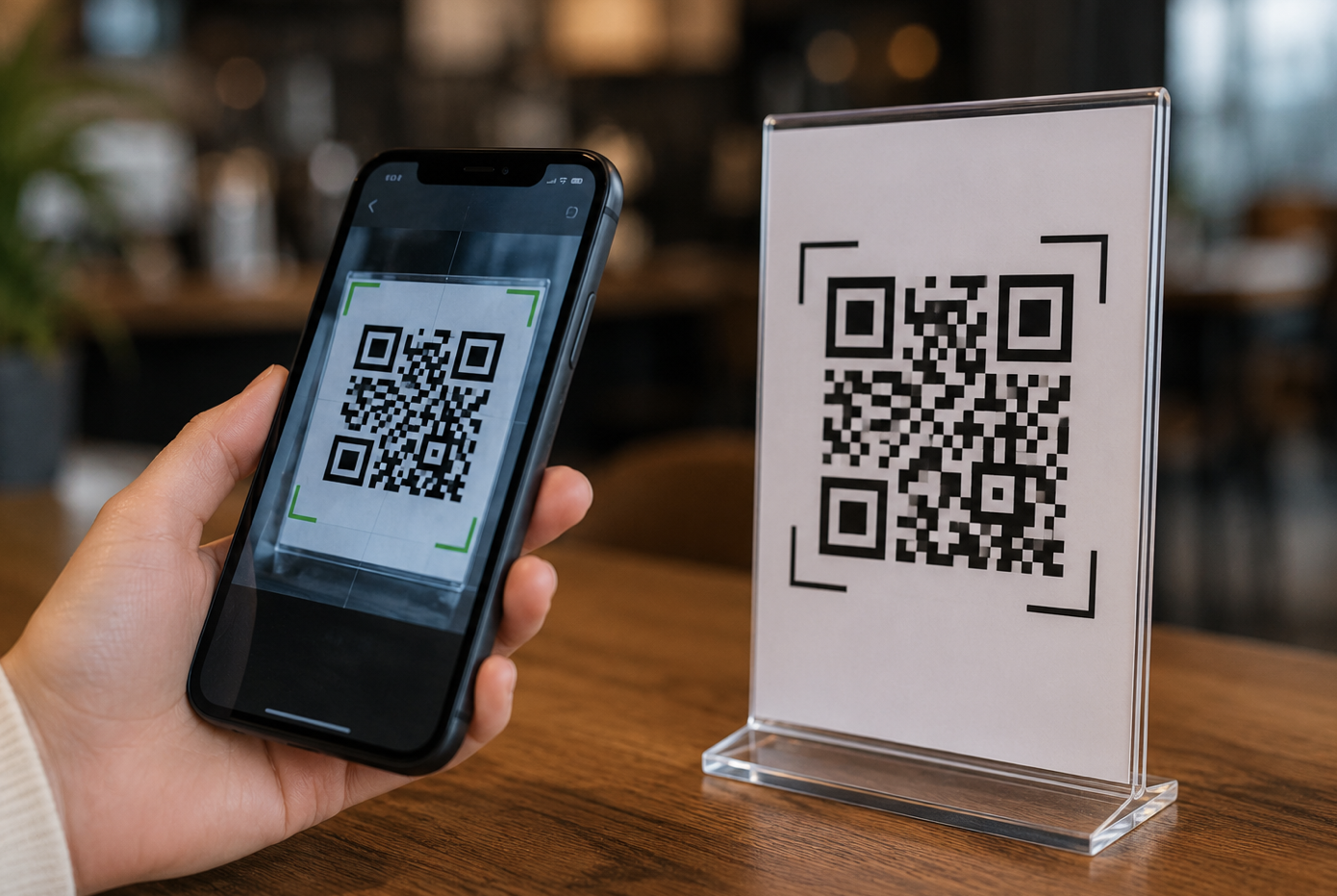
In 1994, an engineer named Masahiro Hara and his team at Denso Wave, a subsidiary of Toyota in Japan, created a small square symbol that would eventually change the way billions of people access information. The symbol was the QR code, short for Quick Response code, and its original purpose had nothing to do with smartphones or digital payments. It was designed purely to solve a practical problem on a car factory floor: how to track thousands of different automotive components more efficiently than existing barcodes allowed.
At the time, traditional barcodes could only store a limited amount of data — typically a short numerical code — and workers had to scan them from a very specific angle. Hara's team wanted a system that could hold far more information, be scanned from any direction, and still be read reliably even if part of the code was damaged or dirty. The result was a two-dimensional matrix of black and white squares that could store up to several hundred times more data than a standard barcode. Three distinctive square patterns in the corners allowed scanners to detect the code's orientation instantly, regardless of how it was held.
Despite its obvious potential, the QR code remained largely unknown outside the manufacturing industry for over a decade. Denso Wave made a deliberate and somewhat unusual decision: rather than patenting the technology aggressively, the company chose to make it freely available to anyone who wished to use it. This open licensing approach was central to its eventual success, since it removed any financial barriers that might have discouraged widespread adoption.
The technology began attracting broader attention in Japan during the early 2000s, when mobile phone manufacturers started building QR code scanners directly into their handsets. Japanese consumers quickly found a range of practical uses for QR codes, from accessing websites to downloading contact details. However, in most other parts of the world, adoption remained slow, largely because smartphones were not yet widespread and many people had no convenient way to scan the codes.
The global breakthrough came somewhat unexpectedly, driven not by a marketing campaign but by a public health crisis. During the COVID-19 pandemic, businesses worldwide urgently needed ways to share information without physical contact. Restaurants replaced printed menus with QR codes that customers could scan from their own phones. Health authorities used them to direct people to testing centres and vaccine registration pages. Almost overnight, scanning a QR code became a routine part of daily life for people who had never previously given the technology a second thought.
Today, QR codes are used in an extraordinary range of contexts. In China and several other Asian countries, they form the backbone of mobile payment systems used by hundreds of millions of people on a daily basis. In retail, they provide instant access to product information and promotional offers. In healthcare, they link patients to medical records and appointment systems. What began as a modest solution to a logistical challenge in a Japanese car factory has quietly become one of the most widely used information technologies in the world — and one that most people now encounter several times a day without giving much thought to where it came from.
Új szavak
- subsidiary – leányvállalat
- orientation – tájolás, irány
- adoption – elfogadás, bevezetés, elterjedés
- contactless – érintésmentes
- backbone – gerinc, alapja valaminek
- logistical – logisztikai
- 1
Masahiro Hara created the QR code while working at a company connected to Toyota.
- 2
The QR code was originally invented for use in smartphone payment apps.
- 3
A QR code can still be read correctly even if part of it is damaged or dirty.
- 4
Denso Wave charged other companies a licensing fee to use the QR code technology.
- 5
Masahiro Hara won an international design award for inventing the QR code.
- 6
During the COVID-19 pandemic, restaurants used QR codes instead of printed menus.
- 7
QR codes are expected to be replaced by a newer technology within the next few years.