The Chernobyl Disaster
C1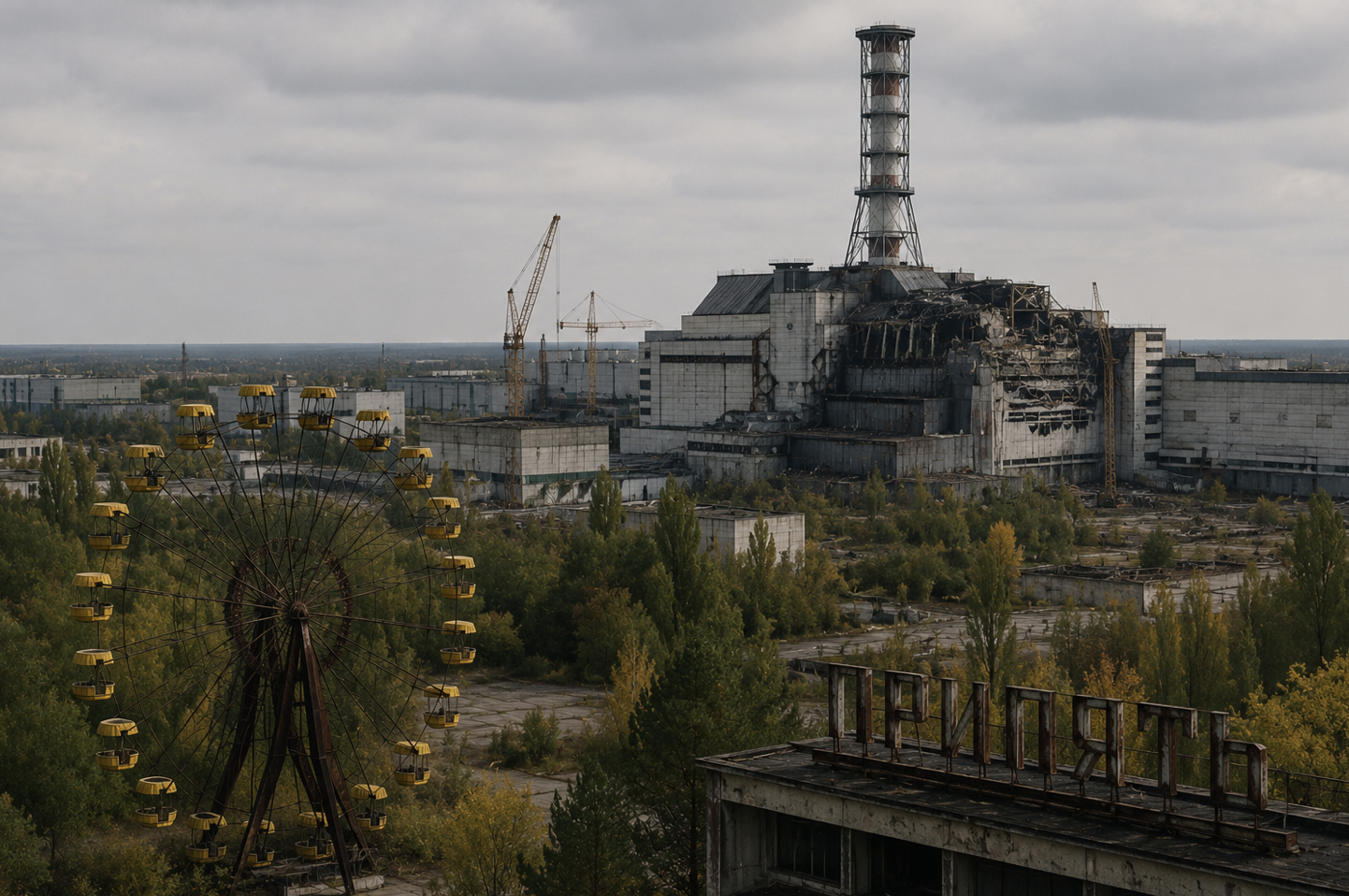
In the early hours of 26 April 1986, Reactor Number Four at the Chernobyl Nuclear Power Plant in what is now northern Ukraine exploded during a safety test that had gone catastrophically wrong. The explosion and the subsequent fire released a cloud of radioactive material into the atmosphere that drifted across large parts of Europe, contaminating vast areas of land and exposing millions of people to elevated levels of radiation. It remains the most serious nuclear accident in history, and its consequences — environmental, political, and human — continue to reverberate nearly four decades later.
The immediate cause of the disaster was a combination of design flaws in the RBMK reactor and a series of errors made by operators who were working under pressure to complete a safety test before a scheduled maintenance shutdown. The test was intended to determine whether the reactor's turbines could generate enough electricity to power the emergency cooling system in the event of a sudden loss of power. In the course of running the test, operators disabled several automatic safety systems and pushed the reactor into an unstable operating state that the RBMK design was particularly ill-suited to handle. When they attempted to shut the reactor down, a rapid and uncontrollable power surge caused two explosions that destroyed the reactor core and blew the roof off the building.
The initial response of Soviet authorities was characterised by a combination of genuine confusion and deliberate concealment. The city of Pripyat, home to nearly fifty thousand people who lived and worked at or near the plant, was not evacuated until more than thirty-six hours after the explosion. Officials were reluctant to acknowledge the full severity of the accident, partly because doing so would have been an implicit admission that Soviet nuclear technology — a point of considerable national pride — was unsafe. It was not until Swedish monitoring stations detected abnormal levels of radiation on the clothing of workers at a Swedish nuclear plant that the international community began to appreciate the scale of what had occurred.
The human cost of the disaster is still a matter of scientific and political debate. The official Soviet death toll attributed directly to the accident was thirty-one, a figure that subsequent studies have widely criticised as a severe underestimate. Among the so-called liquidators — the roughly six hundred thousand workers who were mobilised to contain the disaster, clean up the site, and build the initial concrete sarcophagus encasing the reactor — elevated rates of certain cancers, particularly thyroid cancer, have been documented. The population of surrounding regions, especially children who consumed contaminated milk and food in the weeks following the accident, also showed significantly increased rates of thyroid cancer in the years that followed.
The political consequences of Chernobyl extended well beyond the immediate crisis. Soviet leader Mikhail Gorbachev later argued that the disaster played a significant role in accelerating the process of glasnost — his policy of greater openness — because the inability of the Soviet system to respond effectively or honestly to such a crisis had exposed fundamental structural weaknesses. Beyond the Soviet Union, the accident triggered a wave of reconsideration of nuclear energy policy across Europe and North America, leading to the cancellation of numerous planned nuclear power stations and the introduction of far stricter international safety standards.
Today, the area surrounding the plant — the Chernobyl Exclusion Zone, covering approximately two thousand six hundred square kilometres — remains largely uninhabited, though it has paradoxically become a significant wildlife refuge, with populations of wolves, lynx, and wild horses thriving in the absence of human activity. The ruined reactor itself is now enclosed within a massive steel structure known as the New Safe Confinement, completed in 2016, designed to prevent further release of radioactive material for at least a century. Chernobyl has thus become simultaneously a monument to human error, a symbol of political transformation, and an unintended experiment in ecological recovery.
Új szavak
- sarcophagus – szarkofág, betonburok
- liquidator – felszámoló, Csernobil-takarító munkás
- glasnost – glasznoszty (nyitottság politikája)
- concealment – eltitkolás, leplezés
- reverberate – visszhangzik, hosszan érezteti hatását
- paradoxically – paradox módon, látszólag ellentmondásosan
- 1
What was the immediate cause of the Chernobyl explosion, according to the text?
- 2
Why were Soviet authorities reluctant to acknowledge the full severity of the accident?
- 3
How did the international community first become aware of the scale of the disaster?
- 4
Which health consequence was most clearly documented among affected populations?
- 5
How did Gorbachev connect the Chernobyl disaster to his policy of glasnost?
- 6
What unexpected development has occurred in the Chernobyl Exclusion Zone?
- 7
Which of the following best describes the author's overall characterisation of Chernobyl?